
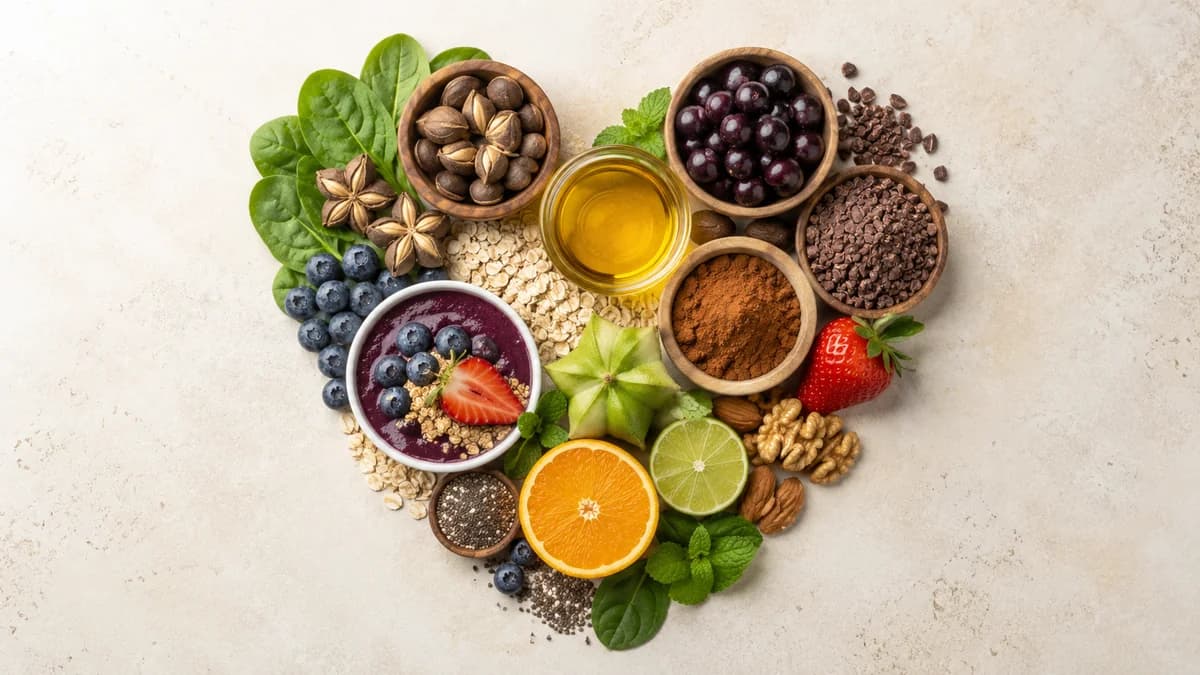
What to Eat to Lower Cholesterol and Triglycerides: A Peruvian Superfoods Guide for Heart Health
TL;DR To support healthy cholesterol and triglyceride levels, focus on more fiber, better fats, fewer added sugars, and less saturated fat. In this guide, you will learn how Peruvian superfoods like Sacha Inchi, pure […]
In this article
- Cholesterol and Triglycerides: What Is the Difference?
- What to Eat to Lower Cholesterol and Triglycerides Realistically
- Foods That Lower Cholesterol: The Heart-Healthy Plate Pattern
- 1. More soluble fiber
- 2. Better fats instead of low-fat everything
- 3. Fewer refined carbs and added sugars
- Foods to Avoid With High Cholesterol and Triglycerides
- Omega-3 Foods for Cardiovascular Wellness
- Peruvian Superfoods That Make Sense in a Heart-Conscious Diet
- Sacha Inchi: A Plant-Based Omega-3 Source From Peru
- Pure Cacao: Flavanols, Magnesium, and a Smarter Chocolate Choice
- Amazonian Açaí: Antioxidant Support for a Colorful Diet
- Can You Reduce Cholesterol in 7 Days or 30 Days?
- What a Heart-Conscious Day Could Look Like
- Final Thoughts
- Frequently Asked Questions
- What are the best foods to lower cholesterol?
- What foods should I avoid with high cholesterol and triglycerides?
- Is Sacha Inchi better than fish oil?
- Is cacao good for a low cholesterol diet?
- Can I lower cholesterol without medication?
When someone searches for what to eat to lower cholesterol and triglycerides, it usually comes from a real concern: a recent blood test, a doctor’s recommendation, or the feeling that it is time to make a serious change. The good news is that food can make a meaningful difference when it becomes part of a consistent routine.
A smart low cholesterol diet is not about fear, punishment, or cutting out everything you enjoy. It is about building a better pattern: more fiber, more unsaturated fats, more whole foods, fewer refined carbs, less added sugar, and fewer sources of saturated and trans fats.
In this guide, we will focus on practical foods that support cardiovascular wellness, including three Peruvian superfoods that fit naturally into a heart-conscious lifestyle: Sacha Inchi, pure cacao, and açaí.
Cholesterol and Triglycerides: What Is the Difference?
Cholesterol and triglycerides are often mentioned together, but they are not the same thing.
Cholesterol is a waxy substance your body needs to build cells, produce hormones, and support normal body functions. The problem begins when LDL cholesterol, often called “bad cholesterol,” stays too high over time. A diet high in saturated and trans fats can contribute to unhealthy LDL cholesterol levels.
Triglycerides are a type of fat your body uses to store extra energy. When you regularly consume more calories than your body needs, especially from added sugars, refined carbohydrates, or alcohol, your body can convert that excess energy into triglycerides.
That is why a diet for high cholesterol and triglycerides needs a double strategy: improve the quality of fats you eat and reduce the foods that overload your body with fast-burning refined carbs and added sugar.
What to Eat to Lower Cholesterol and Triglycerides Realistically
The best approach is not a short-term crash diet. It is a pattern you can repeat every day. A heart-conscious plate usually includes more whole plant foods, more fiber, and better-quality fats.
Prioritize these foods more often:
- Soluble fiber sources: oats, beans, lentils, fruits, vegetables, and chia seeds.
- Omega-3 foods: fatty fish, chia, flaxseed, walnuts, and Sacha Inchi.
- Unsaturated fats: nuts, seeds, avocado, olive oil, and high-quality plant oils.
- Antioxidant-rich foods: pure cacao, açaí, berries, colorful fruits, and vegetables.
- Whole grains: oats, quinoa, brown rice, barley, and other minimally processed grains.
This is what makes cholesterol-lowering foods powerful: they do not work as isolated “miracle foods.” They work best when they become part of a daily eating pattern.
Foods That Lower Cholesterol: The Heart-Healthy Plate Pattern
If you are trying to choose the best foods that lower cholesterol, think in categories instead of memorizing a long list.
1. More soluble fiber
Soluble fiber is one of the most useful nutrients in a cholesterol-conscious diet. It is found in foods like oats, beans, lentils, apples, citrus fruits, chia seeds, and psyllium. A practical breakfast with oats, fruit, and pure cacao can be a simple way to start adding more fiber to your day.
2. Better fats instead of low-fat everything
Many people think the goal is to avoid all fats, but that is not the best strategy. Your body needs healthy fats. The key is to replace saturated and trans fats with unsaturated fats from foods like nuts, seeds, avocado, olive oil, fatty fish, and plant-based omega sources such as Sacha Inchi.
3. Fewer refined carbs and added sugars
Triglycerides often respond strongly to the quality of carbohydrates in your diet. Sugary drinks, desserts, white bread, sweetened cereals, and frequent alcohol intake can make it harder to maintain healthy triglyceride levels. This is why a good plan for cholesterol and triglycerides is not only about fat; it is also about sugar and refined carbs.
Foods to Avoid With High Cholesterol and Triglycerides
A heart-conscious diet does not require perfection, but some foods are better kept occasional, especially if your doctor has already told you that your cholesterol or triglycerides are high.
- Fried foods and heavily processed fast foods.
- Trans fats and products made with partially hydrogenated oils.
- Too much saturated fat from fatty cuts of meat, butter, high-fat dairy, and some ultra-processed foods.
- Sugary drinks, sweetened coffees, sodas, and energy drinks.
- Refined carbohydrates such as white bread, pastries, cookies, and sweet cereals.
- Excess alcohol, especially if triglycerides are elevated.
If you were looking for a simple answer to foods to avoid with high cholesterol and triglycerides, start there. You do not need to eliminate every enjoyable food forever, but you do need to reduce the foods that make your heart-health routine harder to sustain.
Omega-3 Foods for Cardiovascular Wellness
Omega-3 fatty acids are often discussed in heart-health conversations because they are part of the broader family of unsaturated fats. The most studied omega-3s are EPA and DHA, found mainly in marine sources like fatty fish. Plant foods provide ALA, a different type of omega-3 that the body can convert into EPA and DHA only in limited amounts.
That does not make plant-based omega-3 sources useless. It simply means they should be understood correctly. Foods like chia, flaxseed, walnuts, and Sacha Inchi can help improve the quality of fats in your diet, especially if you are building a more plant-forward routine.
Peruvian Superfoods That Make Sense in a Heart-Conscious Diet
Sacha Inchi: A Plant-Based Omega-3 Source From Peru
Sacha Inchi is one of the most interesting Peruvian ingredients for people looking for plant-based omega support. It provides ALA, an essential omega-3 fatty acid found in plant oils, seeds, and nuts.
Its main value is not that it “replaces” fish oil or medication. Its value is that it helps you upgrade the fat quality of your daily routine. For people who dislike fishy aftertaste, follow a plant-forward diet, or want an easy way to add unsaturated fats, Sacha Inchi can be a practical option.
📖 Want to go deeper? Read our guide on Sacha Inchi oil and plant-based omegas .
Extra Virgin Oil (250 ml)
Cold-Pressed Plant-Based OmegasA liquid format that can be added to smoothies, salads, or simple meals. Best used cold to preserve its delicate fatty acid profile.
View Oil
Softgels 1000 mg
Convenient Daily FormatA practical capsule format for people who want plant-based omega support without the taste of oil or fish-based supplements.
View 1000 mg Softgels
Softgels 500 mg
Smaller Capsule OptionA lighter daily format for people who prefer smaller capsules while adding plant-based omegas to their routine.
View 500 mg SoftgelsPure Cacao: Flavanols, Magnesium, and a Smarter Chocolate Choice
Cacao also deserves a place in this conversation, but with one important clarification: not all chocolate is heart-friendly. The difference is sugar, processing, and cacao content.
Pure cacao and high-cacao dark chocolate provide naturally occurring plant compounds such as flavanols, along with minerals like magnesium. That makes unsweetened cacao powder very different from candy-style chocolate products loaded with sugar and additives.
If you enjoy chocolate, the heart-conscious choice is not to eat more sugar. It is to choose a cleaner cacao format and use it intentionally in oatmeal, smoothies, or warm drinks without turning it into a dessert-heavy habit.
 100% Pure and Unsweetened
Organic Cacao Powder (Theobroma cacao)
A simple one-ingredient cacao powder for smoothies, oatmeal, baking, and warm drinks. It lets you enjoy cacao without the added sugar found in many commercial chocolate products.
💡 Preparation tip: Mix cacao powder with a small amount of warm water first to create a smooth paste. Then add the rest of your liquid for better texture.
View Cacao Powder →Amazonian Açaí: Antioxidant Support for a Colorful Diet
Açaí is known for its deep purple color, which comes from naturally occurring anthocyanins. These compounds are part of the reason colorful plant foods are often recommended in a heart-conscious eating pattern.
The key is to choose açaí in a format that does not add excessive sugar. Açaí can fit well into smoothies or bowls when paired with fiber-rich ingredients such as oats, chia, berries, or unsweetened plant-based milk.
Can You Reduce Cholesterol in 7 Days or 30 Days?
Searches like how to reduce cholesterol in 7 days or how to reduce cholesterol in 30 days are very common, but expectations matter. You can start improving your diet in one week, but meaningful lab changes usually require consistency over time.
In the first 7 days, focus on simple wins: replace sugary drinks with water, add oats or legumes, use unsaturated fats instead of butter, reduce fried foods, and include more vegetables. In 30 days, the goal is to make those habits repeatable enough that your doctor can evaluate your progress with follow-up testing when appropriate.
If you are already taking medication for cholesterol, triglycerides, blood pressure, or diabetes, talk with your healthcare provider before making major diet or supplement changes.
What a Heart-Conscious Day Could Look Like
A practical guide on what to eat to lower cholesterol only works if it turns into real meals. Here is a simple example:
- Breakfast: oatmeal with fruit, chia seeds, and pure cacao.
- Lunch: lentils, vegetables, quinoa, and avocado.
- Snack: nuts, fruit, or an unsweetened açaí smoothie.
- Dinner: vegetables, beans or fish, and a source of unsaturated fat.
- Optional support: Sacha Inchi oil or softgels as a plant-based omega addition to your routine.
This kind of routine is more useful than a strict list of forbidden foods. It gives you structure, flexibility, and a realistic way to support your cardiovascular wellness every day.
Final Thoughts
If you were searching for food to lower cholesterol or a heart healthy diet to lower cholesterol, the answer is not one miracle ingredient. It is a better pattern: more fiber, better fats, fewer refined carbs, less added sugar, and more nutrient-dense foods.
Within that pattern, Peruvian superfoods have a real place. Sacha Inchi helps upgrade your plant-based omega intake, cacao offers a cleaner way to enjoy chocolate-like flavor with naturally occurring plant compounds, and açaí adds antioxidant-rich color to smoothies and bowls.
You do not need to make your life complicated to start caring for your heart. You need choices you can repeat. That is where these ingredients become more than a trend: they become practical tools for eating better every day.
Frequently Asked Questions
What are the best foods to lower cholesterol?
The best foods for a cholesterol-conscious diet include oats, beans, lentils, fruits, vegetables, nuts, seeds, fatty fish, olive oil, and high-fiber whole grains. The goal is to increase soluble fiber and replace saturated fats with unsaturated fats.
What foods should I avoid with high cholesterol and triglycerides?
Limit fried foods, trans fats, excess saturated fat, sugary drinks, refined carbohydrates, pastries, and excessive alcohol. These foods can make it harder to maintain healthy cholesterol and triglyceride levels.
Is Sacha Inchi better than fish oil?
Sacha Inchi and fish oil provide different types of omega-3. Fish oil provides EPA and DHA, while Sacha Inchi provides ALA, a plant-based omega-3. Sacha Inchi can be a useful option for people looking for plant-based omega support, but it should not be presented as identical to fish oil.
Is cacao good for a low cholesterol diet?
Pure cacao can fit into a low cholesterol diet when it is unsweetened and used in moderation. The key is to choose cacao powder or high-cacao dark chocolate instead of sugary chocolate products.
Can I lower cholesterol without medication?
Some people can improve their cholesterol numbers through diet, exercise, weight management, and lifestyle changes, but others may still need medication depending on their risk factors. Always follow your doctor’s guidance, especially if you already have high cholesterol, high triglycerides, diabetes, or high blood pressure.
Comments
No comments on this article yet. Be the first to share yours!