
Reishi
REISHI ORIGIN The history of Ganoderma lucidum as a food supplement has been extensively documented in the oldest Chinese pharmacopoeia, "Shen Nong's Herbal Classic." It is known by the name of Lingzhi in China […]
In this article
REISHI
ORIGIN
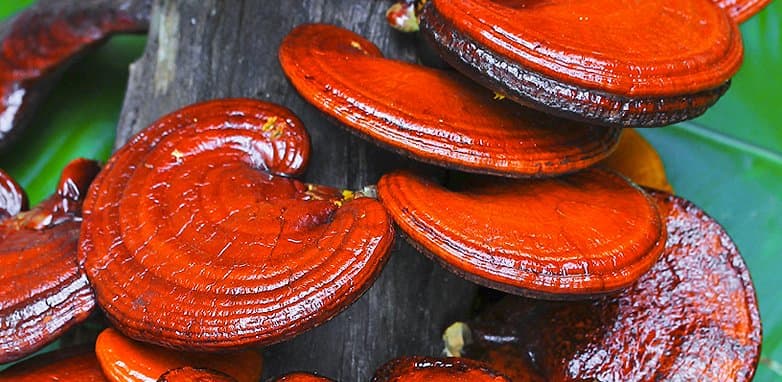
The history of Ganoderma lucidum as a food supplement has been extensively documented in the oldest Chinese pharmacopoeia, "Shen Nong's Herbal Classic." It is known by the name of Lingzhi in China and Reishi in Japan. It is an herbal mushroom to which unique properties are attributed, it is found in nature in plum trees; however, it is extremely rare and almost impossible to find in this way.
COMPOSITION
G. lucidum has a complex chemical composition, however from a phytochemical point of view the principles responsible for its pharmacological properties can be grouped into ergosterol, triterpenoid and polysaccharide. More than 80 terpene derivatives have been isolated, highlighting the so-called ganoderic acids, ganoderioles, ganolucidic acids, lucidic and lanosterol acids. In addition, different polysaccharides have been described in the species, such as the so-called PL-1 and PL-2 heteroglucan, and PL-3 homoglycan and also proteins, lectins and analogues of adenosine.
TRADITIONAL
USE
Its functional properties are considered a home supplement of traditional use for the treatment of various diseases, such as hepatitis, hypertension, hypercholesterolemia, liver disease, arthritis, bronchitis and cancer. It has been used in traditional Chinese medicine for the stimulation of vitality and longevity. It has recently been used in the treatment of weakness, insomnia, gastric ulcers, immune disorders, diabetes, cardiovascular diseases and others.
REISHI
BENEFITS
Antioxidant Effect
The polysaccharides of Reishi help to diminish the production of free radicals, which is considered a main factor in the human aging process. The present superoxide dismutase helps maintain our body throughout the aging process.
Immunomodulatory effects
A marked effect of immune modulation was reported with an increase in T lymphocytes, including T-helpers, as well as a decrease in CD8, in patients whose immunological parameters were initially compromised. It was also reported that the side effects of chemotherapy decreased, the improved recovery of the postoperative patient was observed in comparison with the controls.
Antineoplastic capacity
It has been shown that Reishi has antineoplastic activity due to its immunostimulating properties. Specific effects include an increase in monocytes, macrophages and T lymphocytes. In addition, there is also an increased production of cytokine, interleukin, tumor necrosis factor and interferon.
Cardiovascular Effect
It has been shown to increase cardiac contractility, reduce blood pressure and increase resistance to hypoxia in cardiac muscles.
Antibiotic
It has a broad spectrum of antibacterial activity and inhibits the growth of E. coli, B. dysenteriae, Pseudomonas spp., Pneumococci, streptococci (type A), staphylococci and others.
Anti-Allergic Activity
Compounds that contribute to the antiallergic activity have been identified as the four triterpene- trimeric acids, ie, Ganoderic A, B, C and D. These ganderic acids help to suppress the release of histamine from the cells.
Hepatoprotective effects
Studies in rats previously damaged, indicated to be a powerful antioxidant power against the damage
produced by lipid peroxidation originated in the kidneys and liver.
SECONDARY EFFECTS
AND CONTRADICTIONS
No side effects have been reported in the available literature and clinical studies. However, sensitive people may experience certain detoxification symptoms such as mild digestive discomfort, dizziness, bone pain, and skin rashes during the initial period of ingestion. This is due to the excretion of accumulated toxic substances from the daily modern meals and the vigorous activities of the body metabolism, but do not worry these first discomforts last a short time.
USE
FORM
ETHNOMEDIC USE
For centuries, in traditional Asian culture, Reishi has been known as a cardiotonic herb and has been routinely prescribed for all persons with symptoms of tight or aching chest, coronary artery – disease related to chest insolence.
RECOMMENDED USE
Effective dose has to be between 1.5 to 3 grams of powder per day or take 3 capsules per day accompanied with food.
PREMIUM
PRODUCTS
Ganoderma lucidum- Reishi capsules (90 x 350 mg)
CERTIFICATIONS
RELATED
STUDIES
- 11. The anti-tumor effect of ganoderma lucidum is mediated by cytokines released from activated macrophages and t lymphocytes
- 12. Ganoderma lucidum extract induces cell cycle arrest and apoptosis in mcf-7 human breast cancer cell
- 10. Isolation and identification of two sterols and a triterpenoid from the fruiting body of ganoderma lucidum cultivated in Colombia
- 13. Natural Products of the Medicinal Fungus Ganoderma lucidum: Occurrence, Biological Activities, and Pharmacological Functions
Comments
No comments on this article yet. Be the first to share yours!